
By Lukman OMIKUNLE
As Ogun State celebrates 50 years of its creation, one era stands out as the defining turning point in its economic and developmental history — the years of Otunba Gbenga Daniel as governor from 2003 to 2011.
When Daniel assumed office in 2003, Ogun was largely dependent on civil service wages, with little industrial presence and limited economic ambition. By the time he exited office eight years later, the state had been reborn as one of Nigeria’s most attractive investment destinations, earning global attention and a powerful new identity: Nigeria’s Gateway to Prosperity.
That transformation was neither accidental nor cosmetic. It was the product of deliberate branding, aggressive infrastructure development and hands-on leadership.
Branding Ogun: From Gateway State to Gateway to Prosperity
Daniel’s first major intervention was psychological — branding. He repositioned Ogun beyond geography and infused purpose into its identity. The “Gateway State” became a promise of access, opportunity and growth, deliberately marketed to investors squeezed out of Lagos by congestion and rising costs.
A 2008 confidential U.S. diplomatic cable later released by WikiLeaks captured the shift succinctly: “Ogun State attracts businesses with land, labor, and leadership.”
Under Daniel, Ogun’s internally generated revenue exploded — rising nearly eightfold from about ₦100 million monthly in 2003 to over ₦800 million by 2008. According to then Economic Adviser, Yosola Akinbi, “Before 2003, Ogun had no industries. By 2006, more than 100 factories had opened.”
Infrastructure as Economic Weapon
Daniel understood that branding without infrastructure was empty. His administration embarked on bold, future-facing projects that permanently altered Ogun’s economic trajectory.
These included:
- Olokola Free Trade Zone and Deep Sea Port, envisioned to host the Olokola LNG project
- Kajola Specialized Railway Industrial Free Trade Zone, designed to link industries directly to national transport corridors
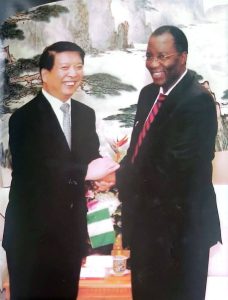
- Ogun–Guangdong Free Trade Zone, a landmark Nigeria–China industrial partnership
- A proposed Cargo Airport to support agriculture and manufacturing exports
These initiatives did more than attract investors — they redefined Ogun as Nigeria’s emerging manufacturing and logistics hub.
Land, Labour and Leadership: The Daniel Formula
While Ogun’s proximity to Lagos gave it natural advantages — cheaper land, affordable labour and easier logistics — investors consistently cited Daniel’s leadership as the decisive factor.
According to the WikiLeaks cable, investors praised his unusual accessibility and follow-through. “Daniel meets directly with investors, attends factory openings and personally follows up on challenges,” the report noted.
Business leaders like Dimeji Owofemi of Multi-Trex Investment Ltd. and Ade Popoola of Reals Confectioneries Ltd. openly credited the governor’s commitment for choosing Ogun over other states.
Powering Industry, Powering Communities
Recognising that no industrial economy survives without electricity, Daniel initiated three Independent Power Projects (IPPs) and planned a public-private electricity distribution framework to reduce dependence on the national grid.
Through a partnership with Shell Nigeria Gas, over 40 industrial customers were connected to gas pipelines, slashing production costs and boosting output. At the same time, transformers were installed in schools, hospitals and communities — reflecting a development model that balanced industry with social welfare.
Human Capital and Local Content
Unlike extractive industrialisation models, Daniel’s administration insisted on local participation. Agreements with free trade zones mandated 40% mid-skilled and 70% low-skilled jobs for Nigerians, ensuring that industrial growth translated into employment and skills development for Ogun residents.
As Akinbi explained, “Ogun negotiated development — not just investment.”
A Legacy That Endures at 50
By 2011, Ogun had joined Nigeria’s top tier of investment destinations. More than a decade later, many of the industrial estates, trade zones and energy frameworks initiated under Daniel still anchor the state’s economy.
As Ogun marks 50 years of existence, the Gbenga Daniel era remains the clearest example of how visionary branding, disciplined leadership and people-centred policy can permanently alter a state’s destiny.
The WikiLeaks cable concluded in 2008: “The secret of Ogun’s success lies not just in land and labour, but in leadership.”
Fifty years on, history has affirmed that verdict