
In the annals of African liberation struggle and post-colonial nation-building, few names commanded rhythmic reverence. One of those is that of Chief Obafemi Jeremiah Oyeniyi Awolowo who has been described by many as the best president Nigeria never had. In this Special Report by HAKEEM ADEGBENRO, he takes a look at the late sage’s legacies and what posterity has done or undone to them over the years
Friday, March 6, 2026 marked the 117th posthumous birthday anniversary of a man widely regarded as the ‘Best President Nigeria never had’. A national icon, who left this stage on May 9, 1987. That man is Chief Obafemi Awolowo whose life can be described as a case study in disciplined ambition and ideological consistency.
Although he sought the presidency multiple times and was denied due to the murky waters of Nigerian politics, his shadow, however, looms larger than those who held the office he sought, but could not get.
From the cocoa-funded skyscrapers of Ibadan to the egalitarian school rooms of the South-west, the philosophy ‘Awoism’ has remained a gold standard for governance across the region and, indeed, other parts of the country.
However, as the years roll by, a haunting question persists: Beyond the nostalgic wearing of his trademark, round-rimmed glasses and the ‘Nehru’ fez cap by modern-day politicians, how have his ideological and physical legacies been sustained by his self-acclaimed apostles?
Investigation reveals that most of what the man worked for have been left in ruins with many devoid of what is known as turn-around maintenance.
Born in 1909 at Ikenne Ogun state, Awolowo was not just a politician; he was a philosopher-statesman. As the first premier of then Western Region, he turned the region into a pacesetter for black Africa.
His system of governance was anchored on four cardinals: Free Primary Education, Free Medical Service, Integrated Rural Development and Full Employment.
He was the first to introduce television broadcasting in Africa, (the Western Nigeria Television) in 1959, beating several European countries to the feat. He built the Liberty Stadium and University of Ife (now Obafemi Awolowo University), he envisioned a race of Africans empowered by ‘mental culture’ and ‘spiritual discipline’.
His community (Ikenne)
Ikenne, the country home of Chief Obafemi Awolowo lies in the eastern part of Ogun state, an hour drive from the state capital, Abeokuta.
It covers an area of approximately 144km, strategically located along the Lagos-Sagamu-Benin Expressway. The community provides easy access to Lagos and other major trade routes. The residents, predominantly of the Remo stock of Yoruba race, are primarily farmers and traders. The area was recently celebrated for achieving Open Defecation Free (ODF) status, with 171 communities meeting sanitation standards.
Awolowo’s residence
The Ikenne residence of Chief Awolowo supposedly is a historic site that serves as a museum and mausoleum dedicated to the life of the late elder-statesman. The mausoleum is a marble-floored structure where his corpse and that of his wife, Hannah Idowu Dideolu (HID) Awolowo, were laid.
The Sopolu Library, built in memory of his own father now serves as a legal resource centre for Olabisi Onabanjo University, Ago Iwoye.
The Efunyela Hall, named after his mother, is now used for receiving prominent visitors and hosting social functions.
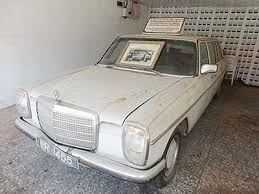
The museum houses a wide array of personal effects and memorabilia such as his campaign vehicle which is an eight-seater grey Mercedes-Benz 230.6 used during his 1979 and 1983 Presidential Election campaigns. Several honorary doctorate gowns, including those from the University of Lagos (1968), University of Ibadan (1961) and the University of Cape Town still hung in one of the museums, along his iconic round-rimmed spectacles and the ‘Awo Fez cap’ synonymous with his public image. There is also a collection of his published books, diaries, various awards and plaques still available. Personal items such as footwear, toiletries and old Nigerian currencies are still available as resource materials at the residence, well nurtured by his children over the years.
Neglected legacies
While his Ikenne residence is largely preserved as a museum, other properties have faced varying degrees of neglect/decay.
In 2024, the iconic Awolowo House in Ikeja, a nerve centre for his political movements since 1978, was demolished to make way for a technology mall. The loss of such a landmark sparked outrage among historians who believed that in other climes, such a building would be a protected national heritage site. His official residence, as leader of the opposition at 7 Bell Avenue, Ikoyi, where he was placed under house arrest today functions as a government-owned building rather than a dedicated private memorial. The house in Lekki, Lagos, where Awolowo was restricted to in 1962, is reportedly in a state of dilapidation, often described as a free accommodation for reptiles.
Public facilities named after him, such as the Obafemi Awolowo Hall at the University of Ibadan, have faced severe criticism for poor maintenance, including unsanitary water sources and decayed walls.
The Obafemi Awolowo University, though regarded as one of the iconic citadels of learning, is still far from reaching its international recognition as he envisaged. The Obafemi Awolowo Stadium (Liberty Stadium) in Ibadan, the first modern stadium in Africa is now a shadow of its former glory. It was the first modern stadium to feature electronic scoreboard and floodlights in Africa.
The floodlights that once illuminated the victories of IICC Shooting Stars are now dim. The Olympic-size swimming pool now sits as a breeding ground for mosquitoes rather than athletes’ use. Current facilities at the stadium include a main bowl with 10 lanes, a media centre, a gymnasium and an Olympic-size swimming pool, many of which require maintenance.
Perhaps, the most heart-breaking ‘ruin’ is Dideolu Specialist Hospital in Ikenne initiated by the sage and continued by his wife, HID Awolowo. The facility was expected to focus on providing specialised medical care, diagnostics and community health services. The complex, which was commissioned by former president, Chief Olusegun Obasanjo included an administrative block, a conference hall, a lecture theatre, a clinic, an outpatient department, wards and operating rooms. Today, the once-celebrated edifice has been left in ruins with over-grown weeds by successive governments, who hitherto are self-acclaimed Awoists.
Today, many projects embarked upon by the late sage that spread across the length and breadth of the South-west remain significantly reduced to mere presence, without proper maintenance.
The most important to say are the construction of inter land roads during his days. He ensured that towns and villages were connected for farming and other businesses. However, today those roads constructed during his time have been neglected, as successive governments have either chosen to start their own legacy projects.
Political dynasty
The Obafemi Awolowo political dynasty cuts across the nation, but more visible in the South-west. Tagged, ‘Awoism’, it symbolises a set of politicians who copy his style of dressing, speech delivery and others, but in actual fact, do not emulate his progressive ideals. Just recently, Osun state governor, Ademola Adeleke, while throwing jibes at such people, called them ‘fake Awoists’ who merely use the name to deceive the public.
Only ‘surviving symbol’
The seemingly only surviving symbol of the late sage is his cap and eye glasses, which have been adopted by some politicians, often regarded as his proteges.
An awoist, Olawale Okunniyi said the late sage’s signature cap is traceable to the first prime minister of India, Jawaharlal Nehru’s model of cap.
Okunniyi, who is the director-general of National Consultative Front, said Awolowo was highly fascinated by the political ideology and anti-colonial struggles of Nehru.
“It can be traced to Awo’s love, liking, admiration for Jawaharlal Nehru of India. Awo was fascinated by his ideology. He was an anti-colonial nationalist and social democrat.
“He wore such model of cap. You can see the link ideologically. So, Awo was fascinated by his cap and adopted it. He saw him as a model, someone to emulate and associate with.”
The veteran activist said the Awo’s signature cap is a symbol of progressive politics and ideology, as according to him, his followers adopted the cap as a sense of solidarity with his political ideology.
“For us who believe in Awo’s political ideology, it gives us a sense of solidarity. It’s not for fashion; it’s the sense of ideological solidarity with Awo.”
He added that some prominent Awoists like the late Pa Ayo Adebanjo also popularised the cap with little adjustments to the style.
“People like Chief Adebanjo wore it in a different way. Awo didn’t raise the front of that cap. He would never raise it; it was just in round form.
“Some people who are progressives still wear it. Awo followers still wear it. If you look at the way Mimiko wears it, he doesn’t raise the top of the cap. It’s the same; you either wear it raising the top or use the round form without lifting the top,” he added.
The 2026 Obafemi Awolowo Memorial Lecture
The morning of March 6, 2026, in Ikenne-Remo was not known for the usual humid stillness of dry season. Instead, there was an electric hum—a collective sharpening of minds as the intellectual and political elites converged on ancestral home of the late sage for the 117th anniversary of his birth. It was essentially the 2026 memorial lecture series, an event that has transitioned from a mere commemorative rite into a high-stakes tribunal for the Nigerian state.
The historic Efunyela Hall felt like a cathedral of logic. Under the watchful eyes of the portrait of the man in the iconic round-rimmed glasses, the air was thick with the scent of old books and the weight of ‘mental magnitude’.
Reminiscences: Chief Obafemi Awolowo 39 years after – Blueprint Newspapers Limited https://blueprint.ng/reminiscences-chief-obafemi-awolowo-39-years-after/